
30 June 2026
10 Signs Your Leather Couch Needs Specialist Cleaning and Conditioning
Your leather couch is an investment. It adds warmth and style to your lounge room, and with the right care, it can last for decades. But leather is also a natural material. It breathes, it absorbs, and it reacts to its environment.
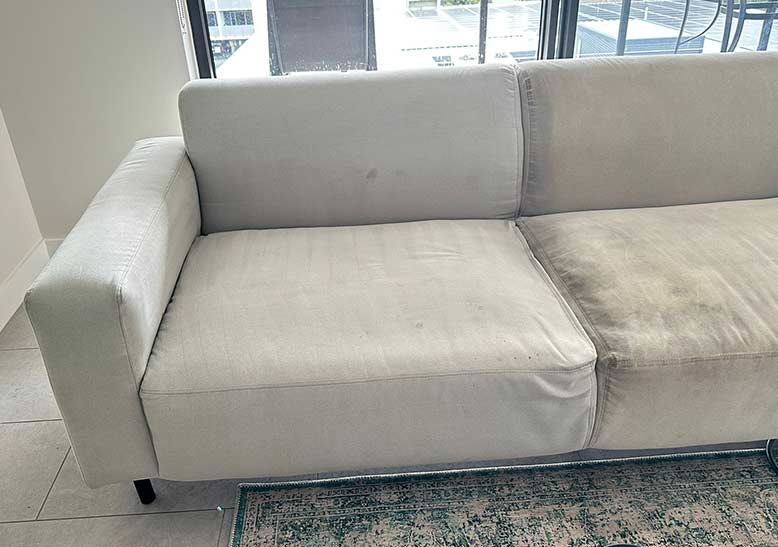
Over time, everyday use takes a toll. Dirt, oils, moisture, and sunlight slowly change how your couch looks and feels.
Catching problems early is the key to preserving your leather furniture. The longer you wait, the harder (and more expensive) those issues become to fix. Specialist cleaning and conditioning can restore your couch and extend its life. But how do you know when it is time?
Here are 10 signs that your leather couch needs specialist care.
Sign 1: Visible Dirt or Grimy Surface
Leather might look smooth and nonporous, but it has a delicate surface that traps dust, dirt, and grime. Over weeks and months, a thin layer of soil builds up from everyday use. You might notice a dull, hazy appearance or feel a slight grit when you run your hand across the surface.
This buildup is more than cosmetic. Dirt particles are abrasive. Every time someone sits down or shifts position, those particles grind against the leather finish. Over time, this causes micro scratches and wears down the protective topcoat.
A quick wipe with a dry cloth is not enough to remove embedded grime. Specialist cleaning uses pH-balanced leather cleaners that lift dirt without stripping the leather's natural oils. If your couch looks dusty even after you wipe it down, it is time for a deeper clean.
Sign 2: Shiny or Greasy Patches
Have you noticed glossy patches on the headrests or armrests? That shine is not a sign of a healthy finish. It is caused by body oils and sweat soaking into the leather over time.
When you rest your head or arms on the same spots day after day, natural oils transfer from your skin into the leather. These oils attract more dirt and create a greasy buildup that darkens and shines the leather in those areas.
Left untreated, these patches can harden and become sticky. The oil buildup also prevents conditioners from penetrating the leather, which leads to dryness and cracking. A specialist cleaner can remove the embedded oils gently and recondition the leather so the colour and texture become even again.
Sign 3: Unpleasant Odours
Leather is porous. It absorbs smells from its surroundings. If your couch has started to develop a musty, sour, or pet-like odour, it is a clear sign that bacteria, spills, or moisture have penetrated the material.
Common sources of odour include pet accidents, spilled drinks, food crumbs, and high humidity. Even if you cannot see a stain, the smell is evidence that something is inside the leather or the cushion foam.
Masking the odour with air fresheners or fabric sprays will not solve the problem. Specialist cleaning treatments reach deep into the leather and padding, removing the source of the smell rather than covering it up. Odour removal is one of the most noticeable benefits of a thorough specialist clean.
Sign 4: Stains That Will Not Come Out
You tried to blot that coffee spill. You dabbed at the ink mark with a damp cloth. But the stain remains.
Some stains set into leather quickly. Water based spills like coffee, juice, or soft drink can penetrate the finish within minutes. Oil based stains (think salad dressing, hand lotion, or cooking oil) are even more stubborn because they bond with the leather's own oils.
Home remedies often make things worse. Vinegar, alcohol, and all purpose cleaners can strip the finish or discolour the leather. Even some products labelled "leather cleaner" are too harsh for regular use.
If you have a stain that will not budge, it is time to call a specialist. They have the tools and know-how to treat the stain without damaging the leather. They can also assess whether the stain has penetrated the finish or if it is still on the surface.
Sign 5: Dry, Cracked, or Stiff Leather
Leather contains natural oils that keep it soft and flexible. Over time, those oils evaporate or break down. When the leather loses its moisture, it becomes dry, stiff, and brittle.
You might notice small cracks forming on the seat cushions, armrests, or along the seams. The leather may feel rough or papery to the touch. In advanced cases, the surface can develop deep fissures that threaten the structural integrity of the couch.
Sunlight is a major culprit. UV rays break down the oils and the dye in leather. Heat from direct sunlight accelerates drying. Indoor heating and air conditioning also pull moisture out of the air and out of your furniture.
Specialist conditioning replenishes the lost oils. A technician applies a high quality conditioner that penetrates the leather fibres, restoring flexibility and preventing further cracking. Catching dryness early gives you the best chance of saving the leather.
Sign 6: Colour Fading or Uneven Tone
Leather that has faded in some areas but not others creates an uneven, worn appearance. This usually happens on cushions, headrests, and arms that get the most sunlight or the most contact.
Fading occurs when the dye in the leather breaks down under UV exposure. It can also happen from friction. Areas that get constant rubbing (like the seat edge where you slide out) can lose colour faster than the rest of the couch.
Some people try to fix fading with DIY dye kits. This is risky. Matching the colour is very difficult, and the results often look patchy or unnatural. A specialist can clean the leather, assess the damage, and apply a colour refresh if needed. Regular conditioning also helps slow down fading by keeping the leather supple and resistant to UV damage.
Sign 7: Sticky or Tacky Surface
A sticky or tacky feel on your leather couch is unsettling. You sit down and feel like the surface is gripping your clothing or your skin. This is not normal.
Stickiness usually means one of two things. First, it could be residue buildup from household cleaners, waxes, or polishes that were not meant for leather. Second, it could be a sign that the leather's protective finish is breaking down. As the finish deteriorates, it becomes tacky and can transfer to your clothes.
Do not try to scrub it off with soap or alcohol. That will likely damage the finish further. A specialist cleaning removes the built up residue safely. If the finish is failing, the technician can recommend refinishing options to restore a smooth, comfortable surface.
Need Your Leather Couch Cleaned?
Mobile leather couch cleaning across Sydney, Melbourne, Brisbane, Perth, Adelaide and Canberra. Call 0488 852 088 for a free, no-obligation quote.
Sign 8: Peeling or Flaking
Peeling and flaking are serious signs of damage. When the top layer of the leather starts to lift away from the material underneath, it looks like cracked paint or dried glue. This is most common on bonded leather, which is a composite material made from leather scraps and a polyurethane coating.
On bonded leather, peeling is often irreversible. The coating separates from the backing, and there is no way to reattach it. On higher quality leather, flaking may indicate that the finish coat has failed due to age, sun exposure, or harsh cleaning products.
If you notice peeling, stop using any cleaning products on the couch immediately. A specialist can evaluate whether the leather can be repaired or if reupholstering is the only option. The sooner you act, the more options you have.
Sign 9: Mould or Mildew Growth
Mould and mildew on leather furniture is a health hazard as well as a cosmetic issue. It appears as black, green, or white spots, often with a musty smell. It thrives in humid environments or on leather that has been wet and not dried properly.
Mould can develop on the surface, but it also grows underneath cushions and inside the frame where you cannot see it. Breathing in mould spores can cause respiratory problems, especially for people with allergies or asthma.
Specialist mould remediation for leather involves specialised cleaning solutions that kill the mould without damaging the leather. The technician will also address the underlying moisture issue and condition the leather afterward to restore its health.
Sign 10: It Has Been More Than 12 Months Since Your Last Specialist Clean
Even if your couch looks fine, it may need specialist care. Many problems develop slowly. By the time you notice them, they have already been doing damage for months.
Industry guidelines recommend specialist leather cleaning and conditioning every 6 to 12 months for residential furniture. If it has been more than a year since your last service, your couch is overdue.
Regular specialist maintenance does more than clean the surface. It removes embedded dirt, replenishes oils, and catches small issues before they become expensive repairs. Think of it like a service for your car. You change the oil before the engine fails. The same principle applies to your leather furniture.
A specialist can give you an honest assessment of your couch's condition and set up a maintenance schedule that fits your household's needs.
What Happens If You Ignore These Signs
Leather damage is progressive. A small dry patch can turn into a crack. A crack can widen into a tear. A surface stain can become a permanent discolouration. Each issue feeds into the next.
If you ignore the signs, your couch will continue to deteriorate. The leather will become brittle and unsightly. Cushions may lose their shape and support. The frame can even warp if moisture damage goes unchecked.
Eventually, you are looking at a costly replacement. High quality leather sofas cost thousands of dollars. Replacing one is far more expensive than regular cleaning and conditioning. For a fraction of the replacement cost, specialist care can add years to your couch's life.
Leather does not heal itself the way fabric does. Once the damage is done, it does not reverse. That is why early intervention is so important.
What to Do Next
If any of these signs sound familiar, the next step is an honest assessment. Look at your couch under good lighting. Run your hand over the surface. Pay attention to how it looks, how it feels, and how it smells.
If you notice one or more of the signs above, specialist cleaning and conditioning is the right move. A leather care technician can:
- Clean the leather thoroughly without damaging the finish
- Remove embedded dirt, oils, and odours
- Replenish natural oils with high quality conditioners
- Assess and treat stains, fading, or minor damage
- Advise you on ongoing maintenance between specialist cleans
When choosing a service, look for technicians who specialise in leather. Not all upholstery cleaners have the right products and know-how for leather. Ask about their process and what products they use.
Between specialist cleans, there are simple things you can do to protect your couch. Keep it out of direct sunlight. Dust it regularly with a soft dry cloth. Blot spills immediately with a clean cloth (do not rub). And avoid household cleaners, furniture polish, and saddle soap, which can damage the leather over time.
Ready to Give Your Leather Couch a New Life?
If your leather couch is showing any of the signs we have covered, do not wait until the damage is permanent. Specialist cleaning and conditioning can restore its beauty, comfort, and durability. Contact us today to schedule an assessment and bring your leather furniture back to life.
Need a Hand With Your Leather Couch?
For stubborn marks, dry or faded leather and lingering smells, our mobile team can help with leather couch conditioning, leather couch deep cleaning, leather couch pet stain & odour removal, leather couch protection treatment, leather couch sanitisation & disinfection, leather couch stain removal across Sydney, Melbourne, Brisbane, Perth, Adelaide and Canberra. Call 0488 852 088 for a free quote.
Frequently asked questions
Common questions about 10 signs your leather couch needs specialist cleaning and conditioning.
Is leather couch cleaning safe?
Yes, absolutely. We use pH-balanced, eco-friendly cleaning solutions and gentle hand-cleaning techniques specifically designed to be safe for delicate leather hides.
Can you clean all leather types?
Yes, our technicians identify and clean all types of leather, including highly porous aniline, semi-aniline, durable pigmented leather, and bonded leather.
Do you use steam on leather?
No. We strictly avoid using steam or hot water extraction on leather. Steam melts the protective topcoat, shrinks the natural hide, and causes irreversible cracking.
How long does it take?
A standard 3-seater leather lounge typically takes between 1.5 to 2.5 hours to properly clean, condition, and protect by hand.
How long does drying take?
Because we use a low-moisture hand-cleaning process, your leather furniture is generally dry and ready to use within 1 to 2 hours after we finish.