
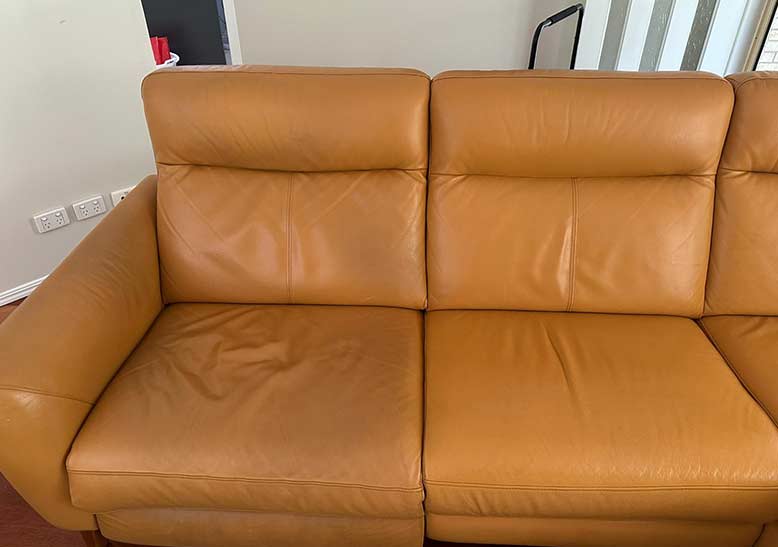
Your leather couch is an investment. It cost you a decent amount of money. You want it to look good. You want it to last.
At some point, you will face a decision. Do you clean it yourself? Or do you call a professional?
This article compares DIY leather couch cleaning with professional leather couch cleaning. We look at costs, time, results, risks, and long term value. By the end, you will know which option suits your situation.
Upfront Cost Comparison
Money matters. Let us start there.
What You Need for DIY Cleaning
If you choose DIY, you need to buy supplies. Here is what a basic leather cleaning kit costs in Australia.
- Leather cleaner: AUD 15 to 40 per bottle
- Leather conditioner: AUD 20 to 50 per bottle
- Microfiber cloths: AUD 8 to 15 for a pack
- Soft bristle brush: AUD 10 to 20
- Leather first aid kit (for scratches or faded spots): AUD 30 to 80
- Total upfront cost: around AUD 80 to 200. Most of these products last multiple cleans. The per-clean cost drops each time you use them.
What Professional Cleaning Costs
Professional leather couch cleaning in Australia is typically charged per seat or as a flat rate for the whole couch.
- Per seat: AUD 40 to 80
- Three seat couch: AUD 120 to 250
- Large corner lounge: AUD 200 to 400
- Full treatment with deep conditioning: AUD 150 to 350
These prices vary by city, the company you hire, and the condition of your couch.
Cost Comparison Table
| Factor | DIY Cleaning | Professional Cleaning |
|---|---|---|
| First time cost | AUD 80 to 200 for supplies | AUD 120 to 400 per service |
| Cost per clean after initial purchase | AUD 5 to 20 | AUD 120 to 400 |
| Products included | You buy and store them | Included in service price |
| Equipment | You supply cloths and brushes | Professionals bring everything |
If you clean your couch every six months, DIY pays for itself after one or two cleans. But cost is only one part of the picture.
Time Investment
DIY Cleaning Time
DIY leather cleaning takes more than just the time you spend wiping the couch.
- Research and shopping: 30 to 60 minutes choosing products
- Vacuuming and dusting: 10 to 15 minutes
- Applying cleaner and scrubbing: 20 to 40 minutes
- Wiping off residue: 10 to 15 minutes
- Applying conditioner: 15 to 20 minutes
- Drying time between steps: 1 to 4 hours total
Plan for 2 to 5 hours from start to finish. Most of that is waiting for the leather to dry. You cannot rush this. Applying conditioner to damp leather can trap moisture and cause damage.
Professional Cleaning Time
A professional cleaner arrives at your home. They move and protect your furniture. They clean each section methodically. They condition the leather. They do a final inspection.
The hands-on work takes 45 minutes to 90 minutes for a standard three seat couch. Drying time is similar to DIY. But you do not wait. You go about your day.
Product Quality
Not all leather cleaners are the same.
Store Bought Products
Most products sold at supermarkets and hardware stores are general purpose. They work on multiple surfaces. They may contain harsh detergents or alcohols that strip natural oils from leather.
Some dedicated leather care brands are good. But the shelves are also full of products that claim to be "leather safe" and are not. Reading labels helps. Knowing what to look for helps more.
The pH level matters. Leather cleaner should be pH neutral. Many all purpose cleaners are alkaline. Alkaline cleaners can damage leather over time.
Professional Grade Products
Professional cleaners use products designed specifically for leather. They are typically pH balanced. They contain ingredients that clean without stripping the finish. They include conditioners that penetrate the leather rather than sitting on top.
Professional products are not available in shops. They are sold through trade suppliers only. This is not a marketing trick. The formulations are different. They are stronger in the right ways and gentler in the right ways.
A professional also knows which product to use for your specific type of leather. Pigmented leather, aniline leather, and semi aniline leather all need different treatment. Using the wrong product on aniline leather can ruin it permanently.
Cleaning Effectiveness
What DIY Can Achieve
DIY cleaning works well for regular maintenance. If your couch gets light use and you clean it every few months, DIY keeps it looking good.
DIY is effective for:
- Removing dust and surface dirt
- Lightening minor grime on armrests and headrests
- Refreshing the appearance of the leather
- Maintaining a couch that is already in good condition
You can achieve a visible improvement. Your couch will look cleaner and smell fresher.
What Professional Cleaning Can Achieve
Professional cleaning reaches deeper. The equipment and products used by professionals lift dirt from the pores of the leather. Surface wiping only removes what is on top. The real grime builds up in the grain.
Professional cleaning is effective for:
- Removing deep body oils and sweat absorbed over years
- Eliminating odours that have soaked into the leather
- Restoring colour in faded or worn areas
- Reviving leather that has become dry and stiff
- Treating couches that have not been cleaned in years
The difference is most obvious on lighter coloured leather. A cream or white couch that has yellowed with use can often be restored close to its original colour by a professional.
Stain Removal
DIY Stain Removal
For fresh spills, DIY can work well.
- Food or drink spills: Blot immediately with a dry cloth. Wipe with a damp microfiber cloth. Let it dry.
- Light ink marks: A dab of isopropyl alcohol on a cotton swab. Test first in a hidden area.
- Grease or oil: Cornflour or baking soda left on the stain for a few hours can absorb some oil.
Home remedies are hit and miss. They work best when you catch the stain right away. Set in stains are much harder to remove without the right chemicals.
Professional Stain Removal
Professionals carry a range of stain specific treatments.
- Protein based stains: Treated with enzymatic cleaners
- Oil and grease: Emulsified with specialised degreasers
- Ink and dye: Dissolved with controlled solvents
- Mould and mildew: Treated with fungicidal leather safe products
A professional can identify the stain type and apply the correct treatment. They also know how to spot test safely. They can treat a stain without spreading it or making it worse.
The key advantage: professionals can remove stains that have been set for months or years.
Conditioning and Protection
Leather needs conditioning. It is not optional. Unconditioned leather dries out, cracks, and loses its colour.
Retail Conditioners
Most conditioners sold in stores are surface level products. They contain silicones and waxes that sit on top of the leather. They make the couch feel soft for a few days. But they do not replenish the oils inside the leather.
Some retail conditioners can even cause problems. They can build up on the surface. This attracts dirt. It can make the leather feel sticky. Over time, it creates a layer that is harder to clean.
Professional Conditioners
Professional grade conditioners are formulated to penetrate the leather. They replace the natural oils that keep leather flexible. They do not sit on top. They soak in.
The result lasts longer. A professionally conditioned couch stays soft and supple for months, not weeks.
Professional conditioners also include UV inhibitors. These help prevent fading from sunlight. Most retail products do not include this protection.
Risk of Damage
This section matters. Leather is expensive to repair or replace.
Common DIY Mistakes
DIY cleaning carries real risk. Here are the most common mistakes.
Using the wrong products
Many household cleaners damage leather. Furniture polish, multi surface sprays, and even some "leather" cleaners contain alcohol, ammonia, or bleach. These strip the protective finish. They dry out the leather. They can cause discolouration.
Over wetting the leather
Leather is porous. If you use too much water or cleaner, the moisture soaks into the backing material. This can cause mould, delamination, and structural damage. DIYers often use more liquid than they should.
Scrubbing too hard
Leather has a fragile surface. Aggressive scrubbing can wear away the colour layer, especially on aniline leather. The result is a patchy, faded look that cannot be fixed easily.
Not drying properly
Leather must dry naturally at room temperature. Using a heater, hair dryer, or placing the couch in direct sunlight to speed drying can cause cracking and shrinkage.
Skipping conditioner
Many people clean their leather and do not condition it. This leaves the leather dry and vulnerable to cracking. Over time, the couch becomes stiff and starts to split.
Using vinegar or soap based solutions
Vinegar is acidic. It can eat away at the leather finish. Soap based cleaners leave residue that attracts dirt. These common DIY remedies do more harm than good.
Why Professionals Are Low Risk
Professional cleaners have training and experience. They can identify your leather type. They know which products are safe. They use controlled amounts of moisture. They follow proper drying procedures.
If something goes wrong, professional cleaners carry insurance. You are protected if damage occurs.
That said, even a professional cannot fix leather that is already too far gone. Severe cracking, structural damage, and some types of chemical damage may be irreversible.
Long Term Value
A leather couch is not a short term purchase. You expect it to last 10, 15, or 20 years with proper care.
Regular DIY Maintenance
DIY cleaning between professional services is important. Dust and dirt act like sandpaper. They wear down the finish over time. Regular dusting and light cleaning prevents this.
Professional Cleaning Extends Life
Professional cleaning goes deeper. It removes the embedded dirt that DIY cannot reach. It conditions the leather thoroughly. It restores flexibility.
A couch that is professionally cleaned and conditioned every 12 to 18 months will last years longer than one that is never cleaned or cleaned only with household products.
The leather stays softer. The colour stays richer. The seams and stitching hold up better because the leather around them is not brittle.
Think of it like a car. You wash it yourself most of the time. But you still take it to a mechanic for a proper service. Your leather couch works the same way.
When DIY is the Better Choice
DIY leather cleaning is not bad. It is the right choice in several situations.
Light dusting and regular wiping
You do not need a professional to wipe down your couch every week. A dry microfiber cloth or a vacuum with a soft brush attachment keeps dust from building up. This is purely maintenance. Do it yourself.
Between professional cleans
Your couch is in good condition. You had it professionally cleaned six months ago. It just needs a refresh. A gentle leather cleaner and a good conditioner will keep it in shape until your next professional service.
Minor spot cleaning
You spilled a drink. You wiped it up quickly. A light clean with a leather safe product is enough. No need to call a pro for a splash of water.
Tight budget
If money is tight right now, DIY is better than doing nothing. Just use proper leather products. Follow the instructions. Test in a hidden area first.
Small couch or chair
A small piece of furniture may not be worth a call out fee. Cleaning a single armchair yourself makes sense.
When Professional Cleaning is Worth It
Professional cleaning costs more. Here is when it is worth every dollar.
Heavy soiling
Your couch is years overdue for a clean. The armrests are dark. The headrest area is greasy. The colour looks dull. A professional can restore what DIY cannot.
Set in stains
That red wine stain from last Christmas? The ink mark your child drew? The pet accident that you thought you cleaned? Professionals have the products and techniques to remove set in stains.
Valuable furniture
If your couch cost thousands of dollars, professional cleaning protects your investment. The cost of cleaning is small compared to the cost of replacement.
Aniline leather
Aniline leather is the most delicate type. It has no protective top coat. It absorbs everything. DIY cleaning can easily ruin aniline leather. Always use a professional who specialises in aniline care.
Before selling or moving
A professionally cleaned couch looks much better. It can increase the resale value of your furniture. If you are moving house, having your couch cleaned before delivery to the new home is convenient.
Persistent odours
Smoke, pet smells, and musty odours get trapped in leather. DIY cleaning only masks these. Professional cleaning with enzyme treatments and deep extraction removes them.
Recommendation Framework
Here is a simple way to decide.
Choose DIY if:
- Your couch is in good condition and you clean it regularly
- You have a small or inexpensive piece of furniture
- You want to maintain the results of a recent professional clean
- You are on a tight budget
Choose professional if:
- Your couch has not been cleaned in over a year
- There are visible stains or odours
- The leather feels dry or looks faded
- You own aniline leather furniture
- Your couch is a high value item
- You are preparing to sell your home or your furniture
Best approach of all
Use both. Clean your couch yourself every few months. Have it professionally cleaned and conditioned once a year or every 18 months. This gives you the best results and the longest life for your furniture.
FAQ
How often should I clean my leather couch?
Light cleaning every 2 to 4 weeks. Deep cleaning with conditioner every 3 to 6 months. Professional service every 12 to 18 months.
Can I use baby wipes to clean my leather couch?
No. Baby wipes contain chemicals and moisturisers that can damage the leather finish. They leave residue that attracts dirt.
Is vinegar safe for leather cleaning?
No. Vinegar is acidic and can damage the leather finish over time. It is not recommended by any leather care professional.
How long does professional leather cleaning take?
About 45 to 90 minutes for a standard three seat couch, plus drying time. Most professionals will give you a time estimate when you book.
Does professional cleaning remove scratches?
It can reduce the appearance of light surface scratches. Deep scratches or gouges usually require repair before cleaning.
Can professional cleaning remove pet stains and smells?
Yes. Professionals use enzyme based treatments that break down pet urine and other biological stains. They also use odour neutralisers that DIY products cannot match.
Will cleaning make my leather couch last longer?
Yes. Regular cleaning and conditioning prevents cracking, fading, and structural damage. A well maintained leather couch can last 15 to 20 years or longer.
Get a Free Quote for Professional Leather Couch Cleaning
We specialise in leather couch cleaning and conditioning across Australia. Our technicians use professional grade products and have years of experience with all leather types. Get a free quote today.